Activities Report 4
Support for children of Soma City, Fukushima Prefecture
The travel expenses for 25 elementary school children in Soma City, Fukushima Prefecture to play in the sea, mountain and river of Kami Tomita Town, Wakayama Prefecuture in Western Japan. The children have been suffering from the devastation caused by the Great East Japan Earthquake on March 11, 2011, and enjoyed the nature together with town people from July 27 till August 3, 2013. Members of the KC of Wakayama also took part.
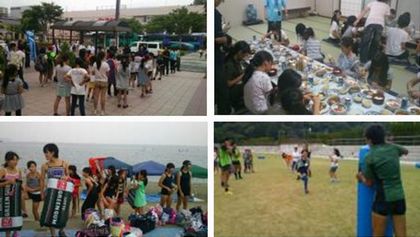
Departure, dinner in Wakayama, sea bathing, and rugby with high-school pupils
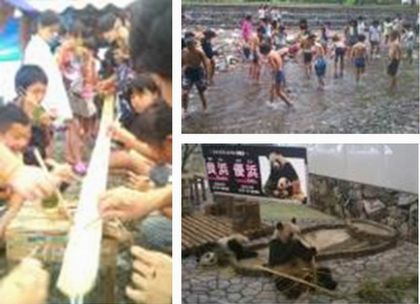
Camp, fish catching, and panda
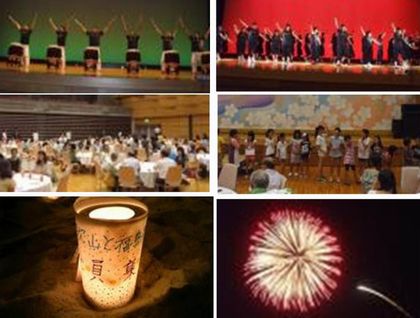
Farewell dinner, candle service and fireworks
Present for children at four child-care centers in Shinchi Town, Soma County, Fukushima Prefecture
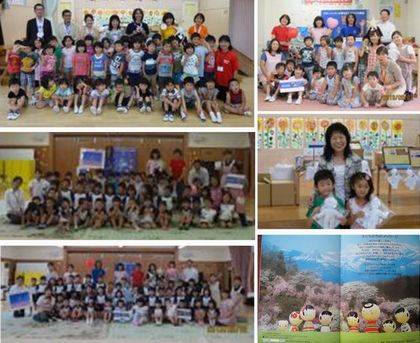
Picture-story show materials presented to 4 child-care centers in Shinchi Town, Soma County, Fukushima Prefecture together with Kiwanis dolls and copies of the booklet providing mothers and children with easily understandable correct information on radioactivity caused by the tsunami at the Fukushima Daiichi Nuclear Power Plant.
Financial assistance to Yuriage Elementary School in Natori City, Miyagi Prefecture for its celebration of the 140th Anniversary
Yuriage Elementary School was devastated by the tsunami on March 11, 2011
and continues to carry out its educational activities at a temporary school building
elsewhere in the city.
To celebrate its 140th Anniversary, the school produced and distributed 300 plastic clear folders
on which are printed the school song and the photo of the school symbol "Chibikko Maru"
(the boat named "tot") on the old school ground.
The current first and second graders of the school have never had chance to play at
the symbol.
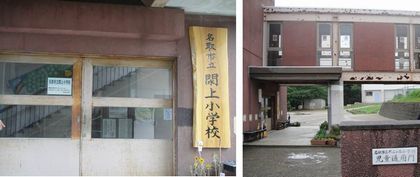
The temporary school building of Yuriage Elementary School inside Fujigaoka Elementary
School in the city.
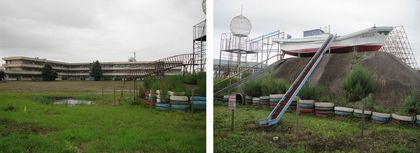
The old tsunami-devastated school building and "Chibikko Maru" on the school ground
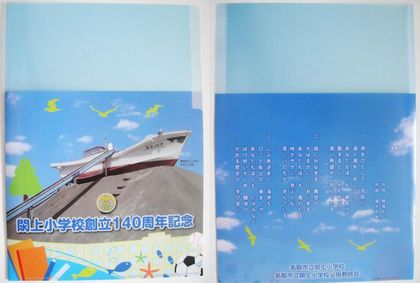
Clear folder to commemorate the 140th Anniversary.
Financial support to Koizumi Junior High School in Kesennuma City, Miyagi Prefecture for extracurricular educational activities.
(In collaboration with the Heart on Coin "Kizuna" project by students of Kwansei Gakuin University and Kiwanis Club of Sendai, Children's Fund.)
Kesennuma City was devastated by the tsunami on March 11, 2011. Many pupils of
Koizumi Junior High School continue to live in temporary houses. To alleviate the financial
burden on the parents for extracurricular educational activities, we provide the
necessary financial support.
The school will be unified with another junior high school in April, 2016.
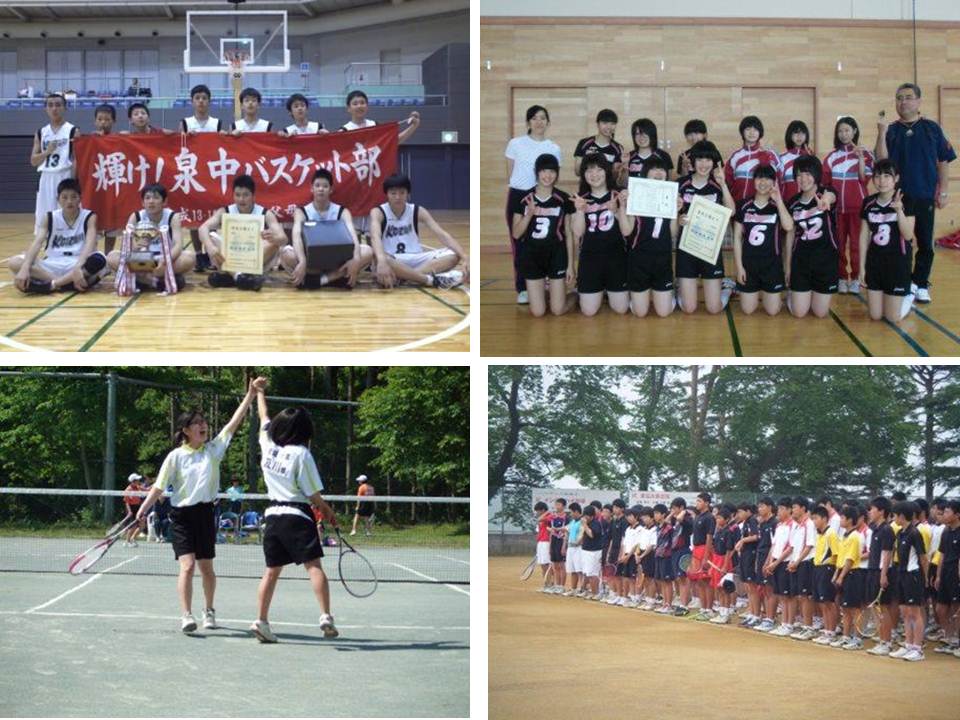
On June 8 and 9, 2013 all 49 pupils of Koizumi Junior High School took part in the
Athletic Meet of the Kesennuma-Motoyoshi District.
Boy's basketball team came in first, Girl's Volleyball team came in third, and
Girl's soft-ball tennis team came in third.
Support for Social Welfare Corporation "Minori-kai" in Natori City, Miyagi Prefecture
Social Welfare Corporation "Minori-kai" in Natori City, Miyagi Prefecture for physically
and/or mentally disabled people had its building near Sendai Airport completely destroyed
by the tsunami.
43 members (including 11 on wheel chairs) and 26 members of the staff could escape the tsunami
following the tsunami warning.
Since then, Minori-kai has been trying to provide services at temporary buildings.
In April, 2013, Minori-kai could re-start its activities in a new building at a new inland
location thanks to the support by the Japanese Government and Miyagi Prefecture.
However, not enough fund was available for new equipment for the new building.
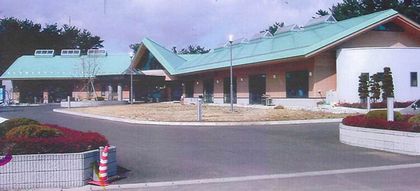
Relatively new Minori-kai building before the tsunami devastation.
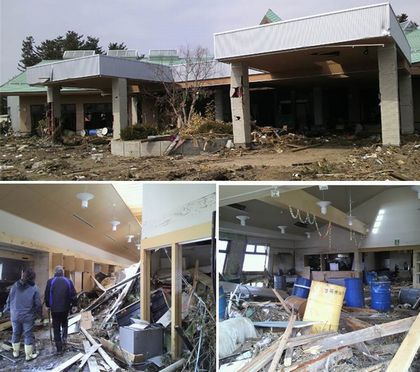
The tsunami destroyed the building.
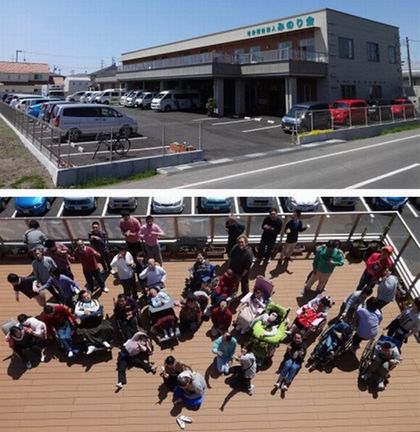
New building located inland was build thanks to the support by the Japanese Government and Miyagi
Prefecture.
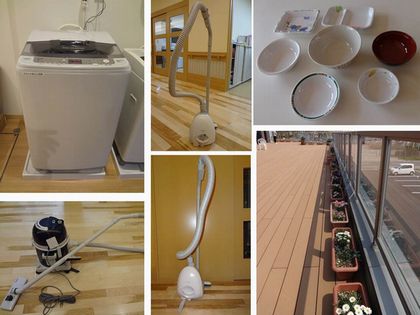
Kiwanis Clubs Joint Fund provides financial support for the purchase of a new washing machine,
new cleaners, eating utensils and gardening supplies in collaboration with
the Kiwanis Club of Sendai,
Children's Fund.
James Nachtwey's article
describes Minori-kai a year after the earthquake and tsunami.
Publication and distribution of a booklet on radioactivity
The booklet provides parents and children with easily understandable correct information on
radioactivity caused by the tsunami damage at the Fukushima Daiichi Nuclear Plant.
Traditional wooden "Kokeshi" dolls play the role of children.
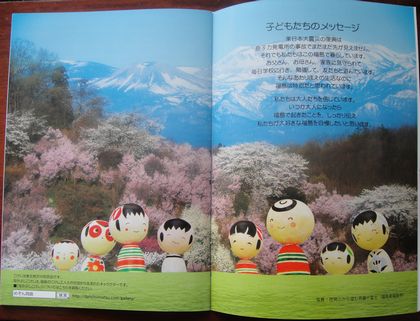
Pamphlet Excerpt (in Japanese)
TERACO Kiwanis building video report
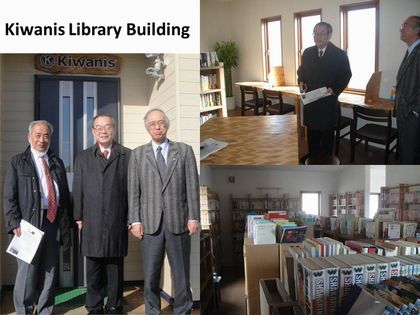
The Kiwanis building is fully functioning as the library.
TERACO library video
This video was created by a high school student user of TERACO.
Study Space TERACO (Shizugawa, Minami Sanriku Town, Miyagi Prefecture)
"Kiwanis Library Building" donated by Kiwanis Clubs Joint Fund, "Bikki Music Building"
donated by the Bikki Organization Miyagi, and "TERACO Study Building" donated by another
organization. Children and local volunteers finished the interior using materials
purchased through the support of KC of Sendai, Children's Fund. The electric work
for the Kiwanis and Bikki Buildings were supported by the KC of Sendai, Children's Fund
and the Bikki Organization Miyagi, respectively.
The three buildings are in full operation for many children who live in
temporary houses. At our visit around noon on December 8, 2012
we could meet only a few children, since most of the children come to TERACO
in late afternoons and evenings.
See our earlier reports in "Activities Report 3" for the history of TERACO and our support.
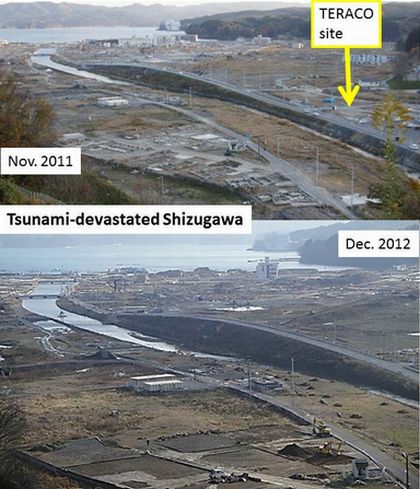
Many of the tsunami-devasted buildings and rubble in Shizugawa have been cleared.
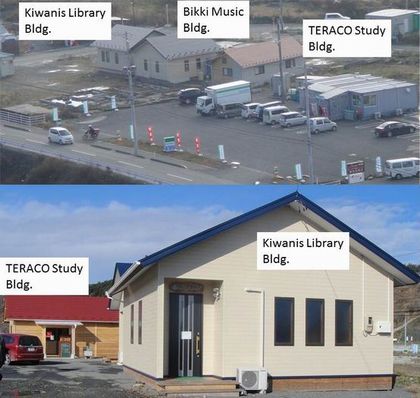
View of the three buildings.
Kiwanis Library Building.
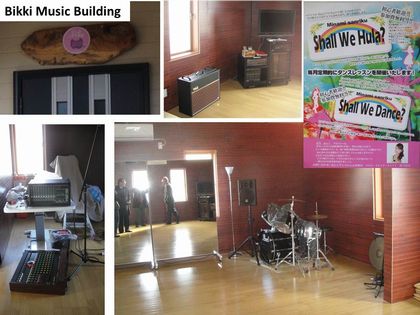
Bikki Music Building. It is also used for dance lessens for adults.
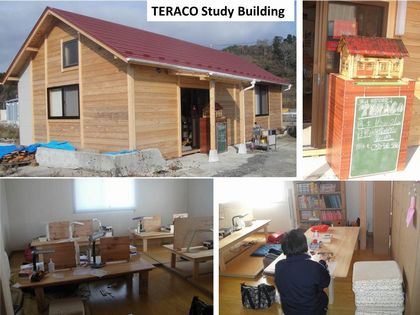
TERACO Study Building.
Support for the "Cosmos Festival" of Namie Junior High School
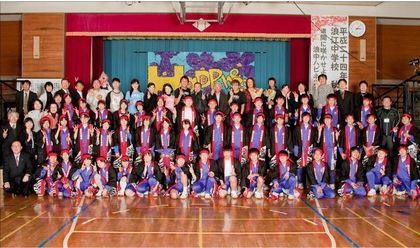
Support for the "Cosmos Festival" on October 28, 2012 by pupils of Namie Junior High School, which was closed due to its proximity to Fukushima Daiichi Nuclear Plant and was reopened in August, 2011 with only 49 students (those wearing "happi" coat) at an old elementary school building in Nihonmatsu City, Fukushima Prefecture. (In collaboration with the Bikki Organization Miyagi and Kiwanis Clubs Sendai Children's Fund)
Traveling expense support for two high school students to visit Cambodia
Kiwanis Clubs Joint Fund provided traveling expenses for two high school students
from the areas stricken by the Great East Japan Earthquake to take part in the
Cambodia Study Tour with Photo Journalist Ms. Natsuki YASUDA.
Ms. Yasuda herself in her high school days went to Cambodia as a “Reporter for Friendship”
of the Non-profit organization “Children without Borders”.
One of the students was a 15 year old girl from Ozuchi Cho, Iwate Prefecture.
She and her family could barely escape the tsunami. She started taking photographic records
of the tsunami devastation since then, especially on the 11th every month.
The other was a 16 year old girl from Shibata Gun, Miyagi Prefecture. The earthquake struck
her area immediately after the commencement of her junior high school.
She joined the photograph club of her high school and has been working with the club members
to support the reconstruction of the earthquake stricken areas.
The Tour first visited in Phnon Penh the “Killing Fields” of the scene of the massacre
during the Pol Pot regime (1975--79), and then Toul Sleng Genocide Museum where they listened
to the horrifying stories from a man who survived the torture.
Then, among others, they visited the following activities of Japanese non-profit organizations,
and could meet many friendly children:
- Mobile Library run by the Shanti (meaning “peace”) Volunteer Association in slums.
- Listened to the story by Mr. Ryoji TAKAYAMA of the “International Mine Clearance and Community Development”, and observed mine clearance activities.
- The factory run by non-profit organization “Kamonohashi Project” against child trafficking.
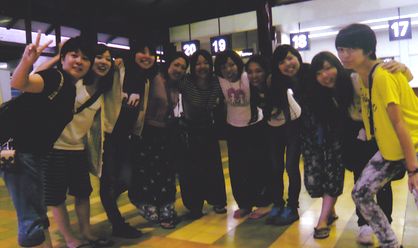
Cambodia Study Tour members
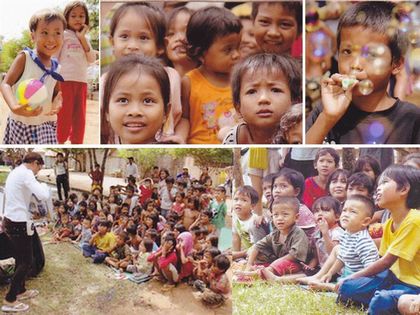
Children they met in Cambodia
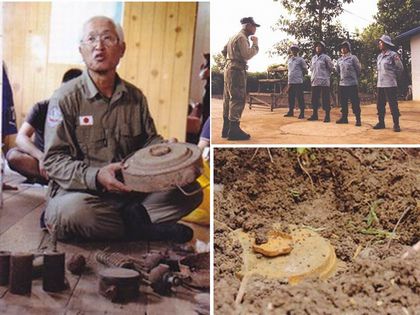
Mr. Ryoji TAKAGI of International Mine Clearance and Community Development